
Glaucoma Management & Surgery
Glaucoma is one of the leading causes of irreversible vision loss in the United States, affecting more than 4.2 million Americans, many of whom
 Trusted Source
VEHSS Modeled Estimates: Prevalence of Glaucoma
Centers for Disease Control and Prevention
Go to Source
do not yet know they have it.
At Kovach Eye Institute, our ophthalmologists provide comprehensive, personalized glaucoma care across our Chicagoland locations. From early diagnosis and laser treatment to some of the most advanced minimally invasive and surgical options available today, we offer a full spectrum of care designed to protect your vision at every stage of the disease.
Trusted Source
VEHSS Modeled Estimates: Prevalence of Glaucoma
Centers for Disease Control and Prevention
Go to Source
do not yet know they have it.
At Kovach Eye Institute, our ophthalmologists provide comprehensive, personalized glaucoma care across our Chicagoland locations. From early diagnosis and laser treatment to some of the most advanced minimally invasive and surgical options available today, we offer a full spectrum of care designed to protect your vision at every stage of the disease.
What Is Glaucoma?
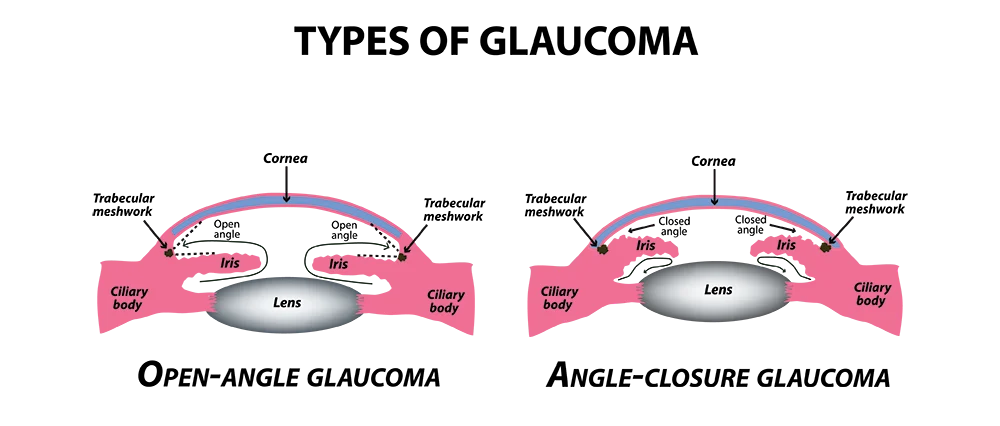
Glaucoma is a group of eye diseases that damage the optic nerve, the critical connection between your eye and your brain. In most cases, this damage is caused by elevated intraocular pressure (IOP), which occurs when the fluid inside the eye, called aqueous humor, does not drain properly. Over time, increased pressure injures the optic nerve, leading to gradual, permanent vision loss.
Because glaucoma typically progresses without pain or noticeable symptoms in its early stages, it is often called the
Trusted Source
Understanding Glaucoma
American Academy of Ophthalmology
Go to Source
“silent thief of sight.”
By the time most patients notice changes in their vision, significant and irreversible damage may have already occurred. This is why routine eye exams and early detection are essential.
Symptoms and Risk Factors
Glaucoma rarely causes symptoms until it has reached an advanced stage. The most common form, primary open-angle glaucoma, causes a slow, painless loss of peripheral (side) vision that many patients do not notice until the disease is well progressed.
Acute angle-closure glaucoma is a less common but more urgent form that can cause sudden eye pain, headache, nausea, blurred vision, and halos around lights. This is a medical emergency requiring immediate care.
You may be at higher risk for glaucoma if you have any of the following:
- A family history of glaucoma
- Age 40 or older (risk increases significantly after age 60)
- African, Hispanic, or Asian ancestry
- Elevated intraocular pressure
- Diabetes or high blood pressure
- Extreme nearsightedness or farsightedness
- Long-term use of corticosteroid medications
- A history of eye injury or prior
Trusted Source
Glaucoma
Cleveland Clinic
Go to Source
eye surgery
How Is Glaucoma Diagnosed?
Early detection is among the most powerful tools in preventing vision loss from glaucoma. At Kovach Eye Institute, our team uses a comprehensive set of diagnostic tools to evaluate your optic nerve health and measure eye pressure with precision.
Your glaucoma evaluation may include:
- Tonometry: measures intraocular pressure
- Gonioscopy: examines the drainage angle of the eye
- Optic nerve imaging (OCT): provides detailed cross-sectional images of the optic nerve and nerve fiber layer
- Visual field testing: maps peripheral vision to detect early loss
- Pachymetry: measures corneal thickness, which affects IOP readings
- Dilated fundus exam: allows direct visualization of the optic nerve
If glaucoma is detected or suspected, our team will work with you to develop a personalized treatment plan based on the type and severity of your condition.
Interventional Glaucoma Care: A Proactive, Modern Approach
Interventional glaucoma care is a modern approach that focuses on treating the condition earlier, before significant vision loss occurs. Rather than relying solely on daily eye drops, this approach uses advanced, minimally invasive procedures to lower intraocular pressure and protect the optic nerve.
At Kovach Eye Institute, our glaucoma specialists offer a full spectrum of interventional treatment options, including sustained-release medication implants, canal-based procedures, and micro-stents designed to improve the eye’s natural drainage system. These treatments are carefully selected based on your individual visual needs and stage of glaucoma. By addressing glaucoma proactively with proven technology, interventional care can reduce dependence on medications, provide more consistent pressure control, and help preserve your vision and quality of life.
Glaucoma Treatment Options at Kovach Eye Institute
Glaucoma treatment focuses on lowering intraocular pressure to slow or stop optic nerve damage. The right approach depends on the type of glaucoma, the degree of progression, and your individual health profile. Our team offers a full range of options, from in-office laser procedures to some of the most advanced surgical interventions available in the Chicago area.
Not sure which option is right for you? Laser treatments like SLT are often used earlier in the disease process, MIGS procedures are ideal for mild to moderate glaucoma, and more advanced surgeries may be recommended for complex or progressive cases. Our physicians will guide you to the option that best fits your specific needs.
Medications
For many patients, prescription eye drops are the first line of treatment. These medications work by either reducing the production of aqueous humor or improving its drainage from the eye. Consistent use is essential, and our team will monitor your response and adjust your regimen as needed.
Selective Laser Trabeculoplasty (SLT)
SLT is a safe, effective, and minimally invasive laser procedure that improves the drainage of fluid from the eye by targeting the trabecular meshwork, the eye’s natural drainage tissue. It is often recommended as a first-line treatment or as an alternative to eye drops for patients with open-angle glaucoma. SLT is performed in-office, requires no incisions, and has a strong safety profile. The procedure can be repeated if needed and is an excellent option for long-term glaucoma management.
Minimally Invasive Glaucoma Surgery (MIGS)
MIGS procedures represent a significant advancement in glaucoma care. These techniques use microscopic instruments and tiny incisions to improve fluid outflow from the eye with minimal disruption to surrounding tissue. MIGS procedures are often performed in combination with cataract surgery, offering patients the opportunity to address both conditions at once. As with any surgical procedure, risks may include temporary IOP fluctuation, mild inflammation, or device-related complications. Our team will review all risks and benefits with you in detail during your consultation.
iStent® (Minimally Invasive Glaucoma Surgery)
The iStent is one of the smallest medical devices ever approved by the
Trusted Source
Glaukos’ iStent inject finally wins FDA approval
American Academy of Ophthalmology
Go to Source
FDA.
This tiny titanium implant is placed in the trabecular meshwork to create a permanent bypass for aqueous humor, improving drainage and reducing IOP. It is typically combined with cataract surgery and is well suited for patients with mild to moderate open-angle glaucoma. Many patients experience reduced reliance on glaucoma eye drops following this procedure.
iTrack™ Canaloplasty
iTrack is a catheter-based procedure that restores the eye’s natural drainage system by opening and dilating Schlemm’s canal, a key channel in the eye’s outflow pathway. Unlike stent-based approaches, iTrack addresses the entire 360 degrees of the conventional outflow pathway, making it a highly effective option for patients seeking a stent-free MIGS solution. iTrack is often performed alongside cataract surgery and is a strong choice for patients with mild to moderate glaucoma.
iDose® TR (Sustained-Release Glaucoma Treatment)
iDose TR is a first-of-its-kind sustained-release travoprost implant placed directly in the eye to continuously deliver medication and lower IOP over an
Trusted Source
Available: hcplive
tooltip text
Go to Source
extended period.
For patients who find the daily routine of eye drops challenging, iDose TR offers a modern, compelling alternative that removes the compliance burden while maintaining consistent pressure control.
AlloFlo™ (Biodegradable Glaucoma Implant)
AlloFlo is an innovative biodegradable implant designed to unlock uveoscleral outflow, an alternative drainage pathway in the eye. As the implant gradually dissolves, it leaves behind a natural channel for fluid to exit the eye, supporting the eye’s natural function while providing effective pressure control without a permanent device. Kovach Eye Institute is among the early adopters of this technology in the Chicagoland region.
Advanced Glaucoma Surgery
For patients with moderate to advanced glaucoma, or those who have not achieved adequate pressure control with laser or MIGS procedures, more advanced surgical options may be recommended. These procedures carry a higher complexity profile and are performed by our experienced surgical team with careful pre-operative planning and post-operative monitoring.
XEN® Gel Stent
The XEN Gel Stent is a soft, flexible micro-implant made from a biocompatible gelatin material. It is inserted through a small incision to create a new drainage channel that redirects aqueous humor beneath the conjunctiva, forming a small filtering bleb that absorbs the fluid. XEN is less invasive than traditional filtering surgery and offers a faster recovery, making it a strong option for patients who need more advanced pressure management.
Ahmed® Glaucoma Valve (Advanced Glaucoma Surgery)
The Ahmed Glaucoma Valve is a tube shunt device used for patients with complex or refractory glaucoma, including those who have not responded adequately to prior interventions. A small silicone tube is implanted to redirect fluid to a reservoir plate positioned on the surface of the eye, where it is absorbed by surrounding tissue. The valve mechanism helps regulate pressure and prevent hypotony. This procedure is typically reserved for advanced cases requiring more aggressive IOP management.
Why Choose Kovach Eye Institute for Glaucoma Care
Kovach Eye Institute has been serving patients across Chicagoland with advanced ophthalmic care for decades. Our glaucoma program stands apart because of the breadth of treatment options we offer, the technology we invest in, and the personalized attention every patient receives.
- Ophthalmologists with extensive experience in glaucoma diagnosis and surgical management
- Among the most comprehensive glaucoma treatment options in the region, including SLT, iStent, iTrack, iDose, AlloFlo, XEN Gel Stent, and Ahmed Glaucoma Valve
- Early access to emerging technologies and next-generation interventional glaucoma procedures
- Multi-location convenience across Naperville, Elmhurst, South Barrington, and Lincolnwood
- Personalized treatment plans tailored to the type, stage, and progression of your glaucoma
- Coordinated care across our full-service ophthalmology practice, including cataract surgery, retina, and cornea

What Our Patients Are Saying
The individuals featured are actual Kovach Eye patients who were not compensated. Results vary and are not guaranteed. A patient consultation is required to set realistic expectations based on your medical history and lifestyle.

Dr Mateen is very friendly and knowledgeable, describing all conditions and making sure you understand all procedures. I have recommended him to my Husband and youngest son, as well as others. Having Glaucoma, as a senior, I feel secure with my treatments and future vision. - I.F.
I took my husband to Kovach Eye institute for an eye exam to check for glaucoma. The staff was truly amazing!!!! The doctor was extremely knowledgeable and friendly. He explained to us what was going on with his eyes and how to prevent any issues in the future. It looks like we made a great choice in trusting Kovach Eye Institute with his eyes. - M.A.
I had an excellent experience with Kevin Kovach. My appointment was scheduled quickly, and the visit was very efficient and professional. Dr. Kovach made a thorough evaluation and correctly diagnosed iridocyclitis, cataracts, and glaucoma. He clearly explained each condition and outlined the next steps in my treatment plan, which made me feel informed and reassured. I truly appreciate the quality of care and highly recommend him. - Z.A.
Frequently Asked Questions About Glaucoma
Glaucoma cannot be cured, but it can be effectively managed. With early detection and consistent treatment, most patients are able to preserve their functional vision for life. The goal of treatment is to lower intraocular pressure and prevent further optic nerve damage.
In most cases, early-stage glaucoma has no noticeable symptoms. This is why regular comprehensive eye exams are so important, especially if you have risk factors. As the disease progresses, patients may notice a gradual loss of peripheral vision.
Adults over 40 should have a comprehensive eye exam every one to two years. Those with risk factors, including a family history of glaucoma, elevated eye pressure, or certain medical conditions, should be screened more frequently. Your eye doctor will recommend a schedule based on your individual risk profile.
Yes. Many patients manage glaucoma successfully with prescription eye drops or laser treatment such as SLT. Surgery is typically recommended when these approaches are insufficient to control intraocular pressure or when the disease is progressing despite treatment.
MIGS procedures use microscopic instruments and tiny incisions to improve fluid drainage with minimal disruption to the eye. They generally carry a lower risk profile and faster recovery compared to traditional surgeries such as trabeculectomy or tube shunt implantation. Traditional surgery is typically reserved for more advanced or complex cases.
Schedule Your Glaucoma Eye Exam
If you have been diagnosed with glaucoma, are experiencing changes in your vision, or have risk factors that concern you, do not wait. Early intervention is among the most effective ways to protect your sight. The team at Kovach Eye Institute is here to help patients throughout Chicago, with locations in Elmhurst, Naperville, South Barrington, and Lincolnwood receive the expert, personalized glaucoma care they need.
Contact us today to schedule your eye exam appointment and take the first step toward protecting your vision.
1 Centers for Disease Control and Prevention. VEHSS Modeled Estimates: Prevalence of Glaucoma. Available: https://www.cdc.gov/vision-health-data/prevalence-estimates/prevalence-estimates-glaucoma.html. Accessed May 20, 2026.
2 American Academy of Ophthalmology. Understanding Glaucoma. Available: https://aao.org/eye-health/diseases/what-is-glaucoma. Accessed May 6, 2026.
3 Cleveland Clinic. Glaucoma. Available: https://my.clevelandclinic.org/health/diseases/4212-glaucoma. Accessed May 6, 2026.
4 American Academy of Ophthalmology. Glaukos’ iStent inject finally wins FDA approval. Available: https://www.aao.org/education/headline/glaukos-istent-inject-finally-wins-fda-approval. Accessed May 6, 2026.
5 HCPLive, “FDA Approves New Drug Application for Travoprost Intracameral Implant,” December 2023. Available: hcplive.com/view/fda-approves-new-drug-application-travoprost-intracameral-implant. Accessed May 6, 2026.
The doctors at Kovach Eye Institute have either authored or reviewed and approved this content.
Page Updated: